

we are the next generation of farmers and ranchers
Our farm training programs offer hands-on experience on a diverse network of small to mid-size sustainable farms in Oregon. We provide real world opportunities for beginners and advanced students of agriculture.

RFC offers connections to farm apprenticeships in Oregon as well as an educational event series for beginning farmers.

RFC helps beginning farm businesses seek land and resources through education, networking, and technical assistance.
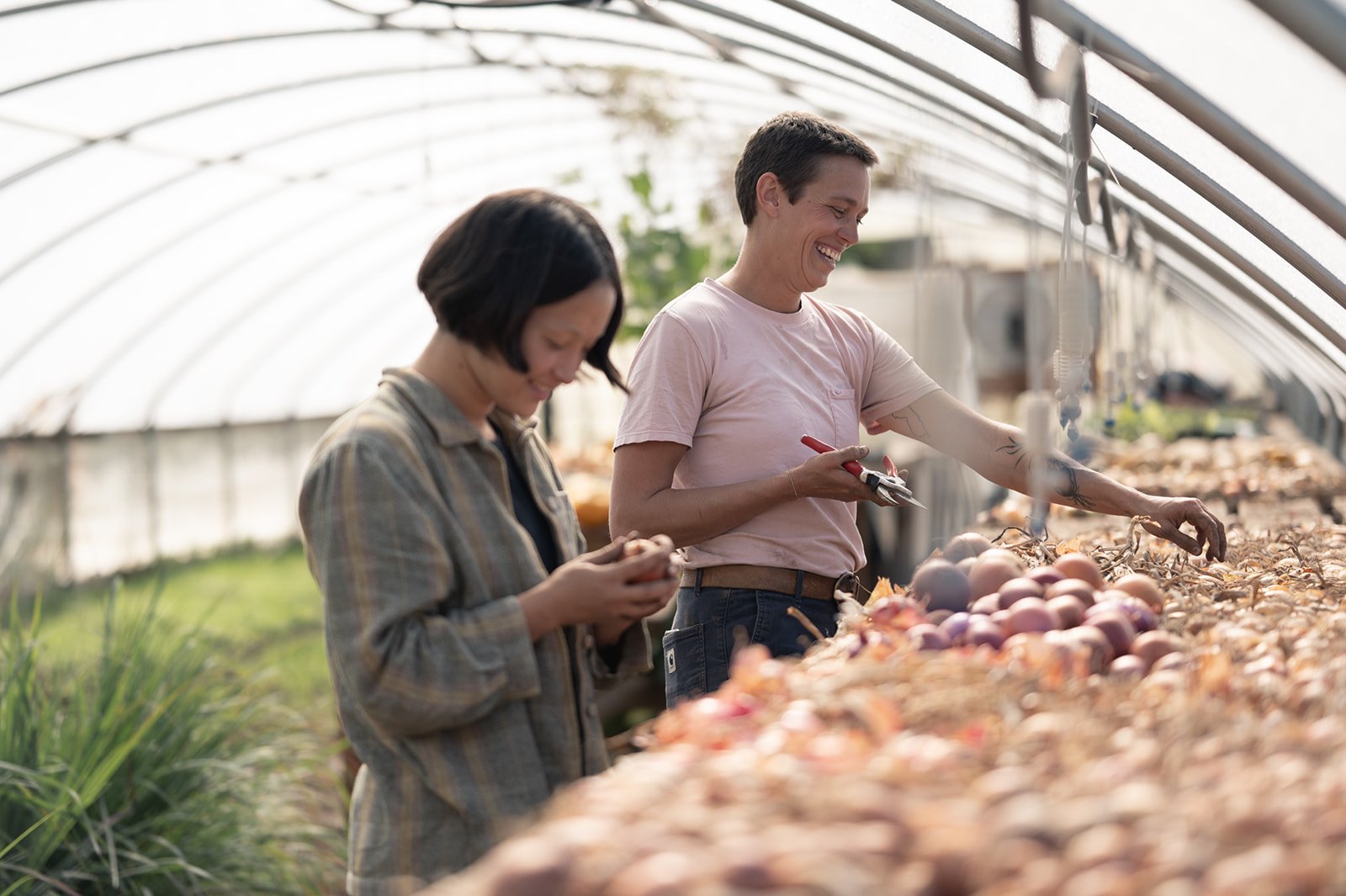
Get involved! Support the transformation of the food system from the ground up. Your gift directly supports RFC's programs.
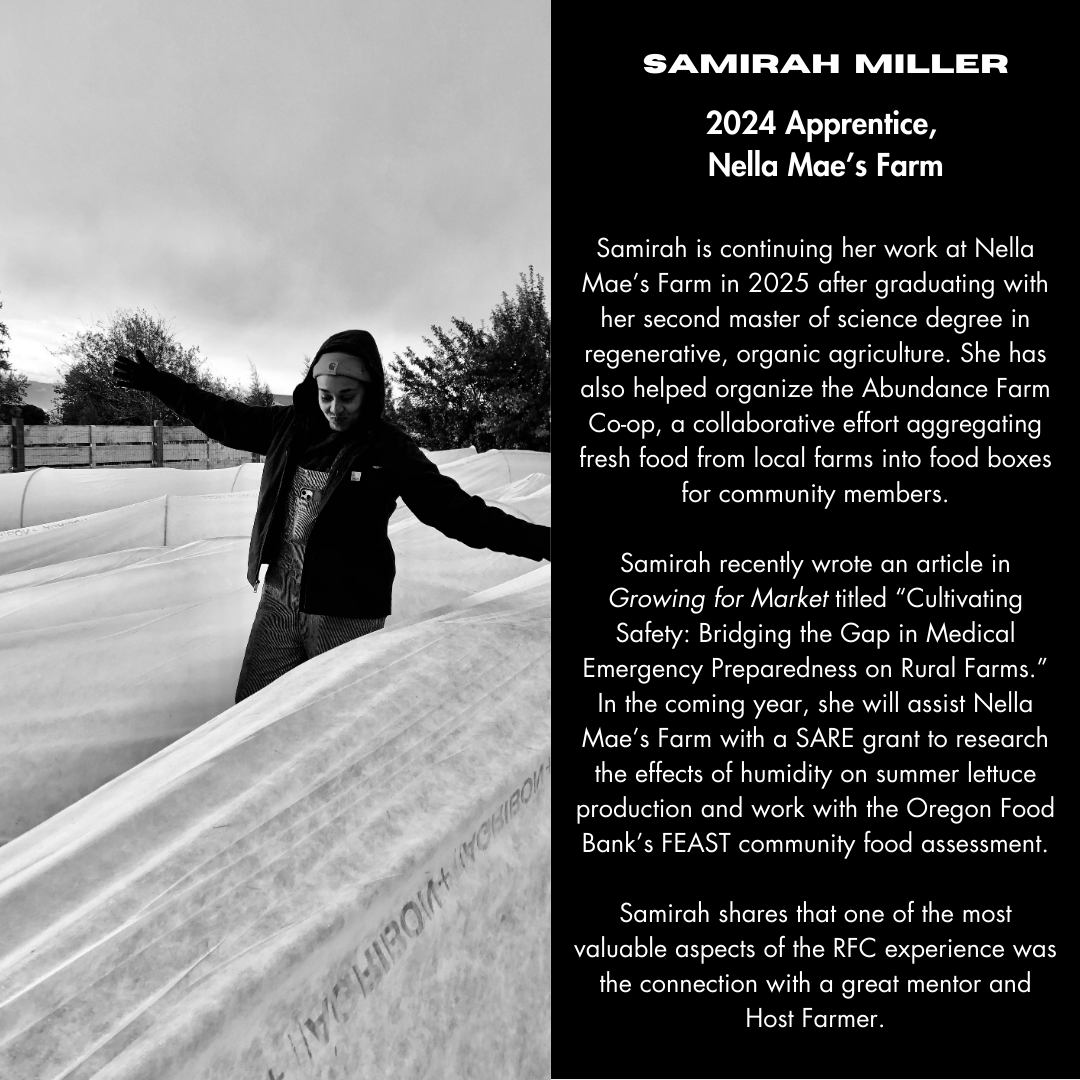
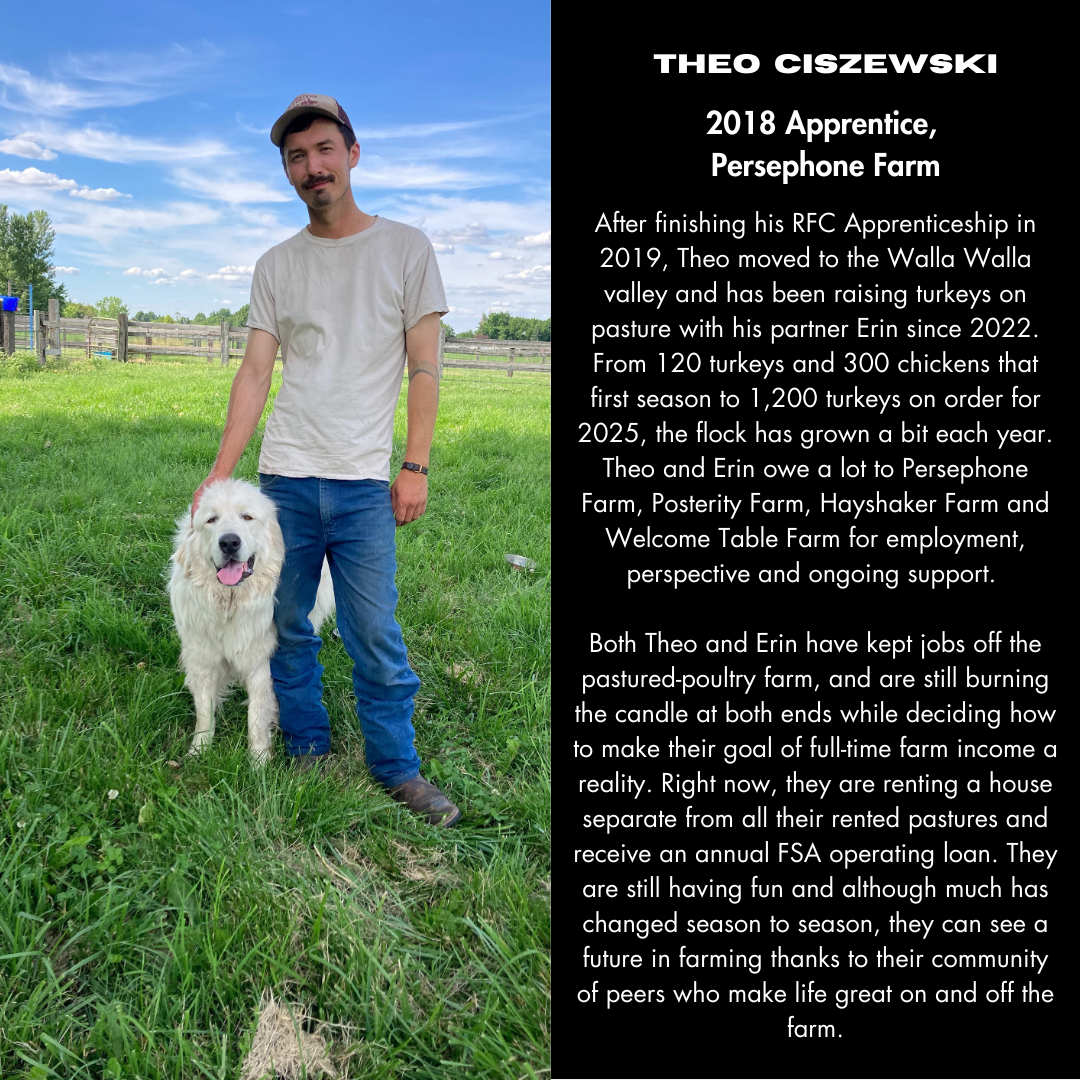
Grads At Work
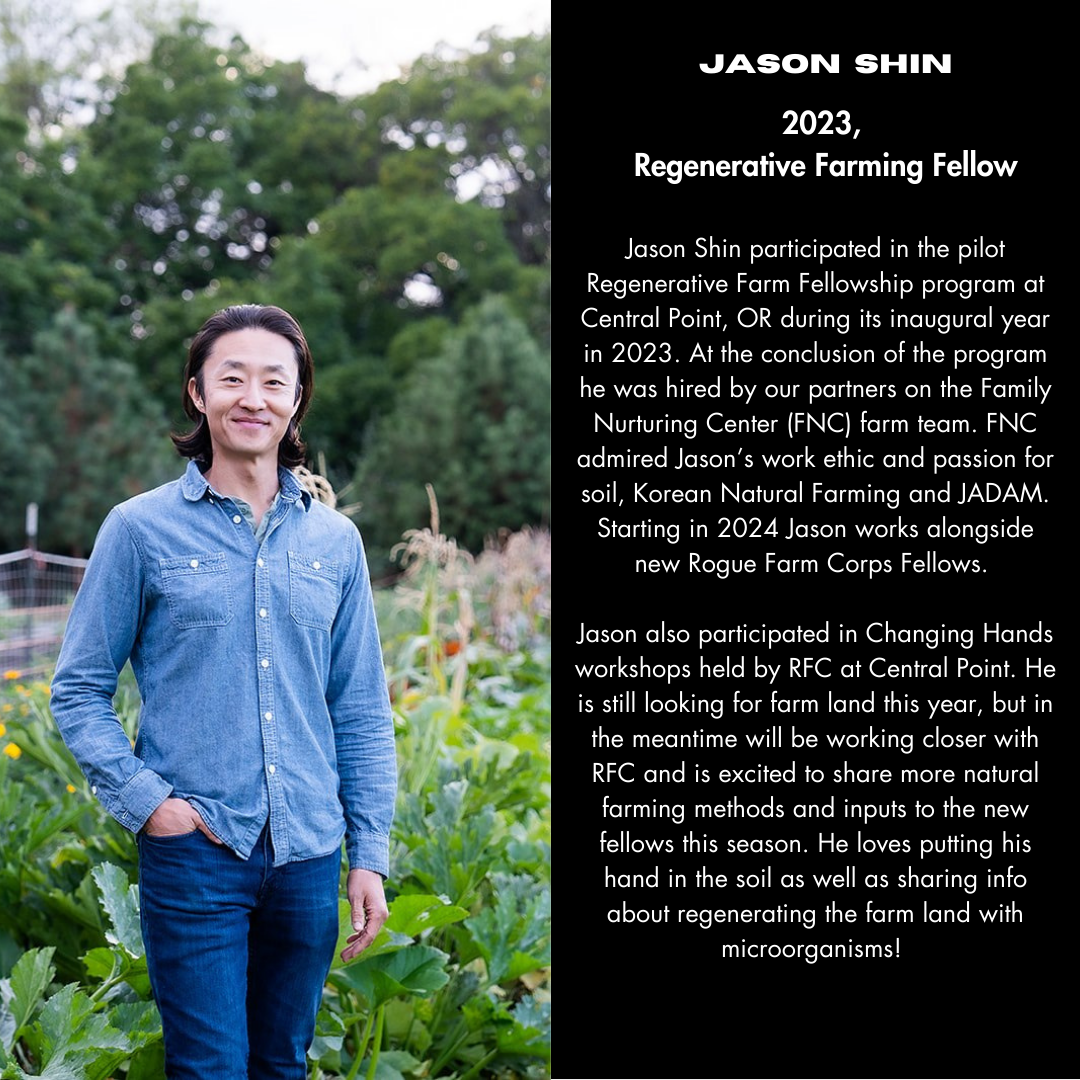
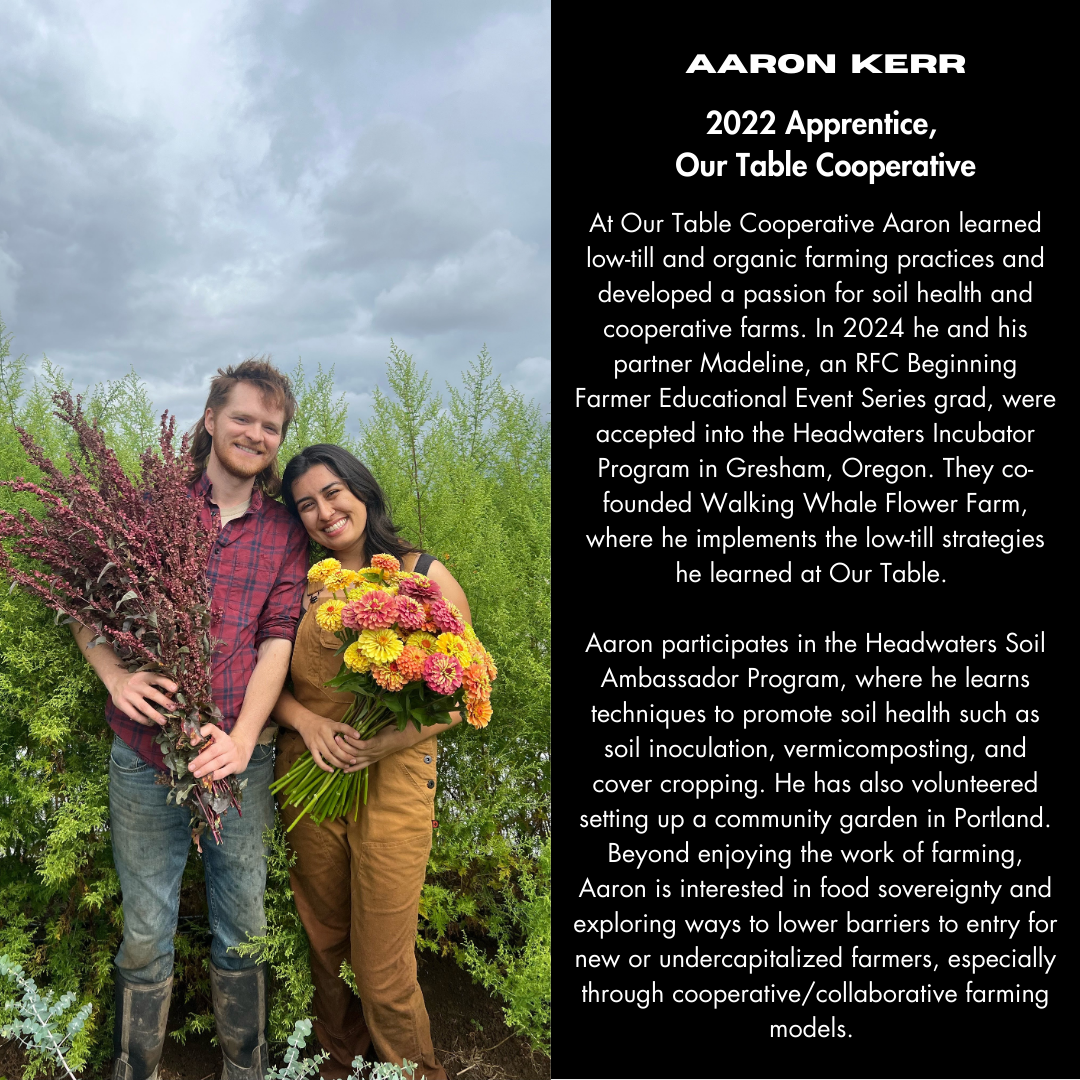
See where recent alumni are now, how RFC's programs influenced their decisions, and their next steps in contributing to the agricultural systems in which we all rely.
Equity Statement
Throughout the US and in Oregon, where Rogue Farm Corps operates, there is a history of racial exclusion, violence, and land theft that has left a legacy of injustice that is still being felt today through disparities in our food system and beyond. The industrial food system has been, and continues to be, made possible in large part by liberally exploiting labor from Black, Indigenous, and people of color. At the same time, decision-makers have systematically passed policies that limit access to land and capital for these groups.
In our work to train and equip the next generation of farmers and ranchers, RFC holds a vision for a world in which land is deeply cared for, power is equitably shared, and farms, ranches, and the people who work them flourish. We know that this vision cannot be realized until we dismantle white supremacy, respect the rights of workers, and are willing to share power and resources.
Racial justice has not always been a stated priority for RFC. We recognize that our past inaction has reinforced systemic racism in our food system. Moving forward, RFC will strive to center racial justice in our work.
We are committed to engaging in an ongoing learning process around privilege, power, inequality and systems of oppression, and using our organizational power to be an agent of change. We acknowledge that this work is urgent, and that it also requires patience and dedication for the long haul. Some of the ways we have and will continue to engage in this work, are:
Approaching all of our work through an equity lens;
Providing ongoing Diversity Equity and Inclusion (DEI) training for our staff, board, partner farms, and program participants; as well as dedicating time to ongoing learning and reflection;
Transforming our programs to make them accessible to and inclusive of communities who have historically been under-represented as farmers in Oregon, including people of color, women, LGBTQIA2S+ individuals, low-income individuals and immigrants;
Incorporating food justice, anti-racism, and Indigenous knowledge into the curriculum of our educational programs;
Offering program scholarships to members of historically marginalized groups;
Celebrating the many contributions to agriculture made by Indigenous people, immigrants, queer farmers and farmers of color;
Developing strategies to make farmland more accessible;
Conducting thorough program evaluations that center the experience of underserved communities;
Lifting up and supporting partner organizations that primarily serve BIPOC and other underserved communities; and
Holding our staff, board, host farmers, and instructors accountable for putting DEI into practice throughout our organization and programs.
Rogue Farm Corps is working to build a staff and board that represent the communities we serve, including more farmers of color and farmers from all of the agricultural communities in which we operate.
As we strive to dismantle systems of oppression that exist in agriculture, in ourselves, and in society, we know that we will make mistakes, and we will count on our community to help us grow through them. Please reach out to us with any questions, ideas, or input.